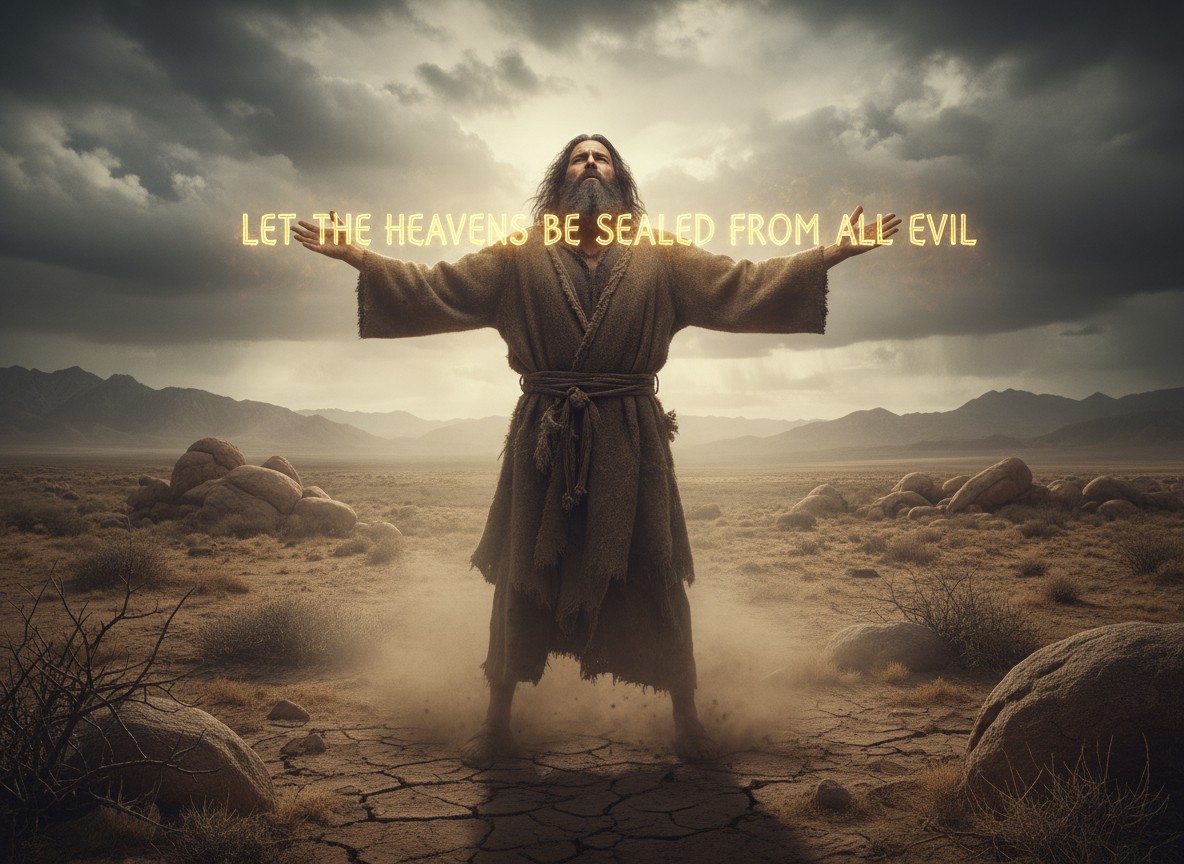
Isaiah 40:3 says, “A voice cries: ‘In the wilderness prepare the way of the LORD; make straight in the desert a highway for our God.’” This is the prophetic root: a voice sent before the revealing of the Lord.
Elijah, John the Baptist, and Christ
Some teachers of Scripture say that when you die you go to heaven. Yet Scripture also teaches us to search deeper, to weigh every saying, and to ask what God is revealing through prophecy, fulfillment, mercy, judgment, and truth.
Treasures in Heaven and the Voice That Prepares the Way
The phrase “store up for yourselves treasures in heaven” comes from Matthew 6:20, where Jesus teaches His followers to seek spiritual treasure rather than earthly treasure that can decay or be stolen. This teaching belongs to the Sermon on the Mount, where Christ turns the heart away from temporary gain and toward eternal reward.
A Scripture-Rooted Riddle of the Forerunner
Who Comes in the Spirit and Power?
I call fire from heaven, yet I am not the Light.
I silence false gods, yet I am not the Word.
I never taste death, yet I must return.
I stand before kings, yet wear no crown.
I turn hearts before judgment falls,
yet when I come, many do not see me at all.
I walk in skin once clothed in hair.
I cry in deserts and palaces alike.
I decrease so Another may increase.
Who am I when I confront?
Who am I when I prepare?
Who am I when the Lord Himself says,
“If you can receive it — he is I”?
— Immanuel
Answer: Elijah — seen in John the Baptist, fulfilled in the witness that points to Christ.
Elijah Has Come — Do You Have Ears to Hear?
Scripture focus: Malachi 4:5–6, Matthew 11:14, Matthew 17:12
Brothers and sisters, God does not repeat Himself without purpose — He fulfills what He has spoken.
Israel waited for Elijah to fall from the sky in fire, but God sent him wrapped in humility, clothed in camel hair, crying not from a mountain, but from the wilderness.
“Elijah has already come — and they did not recognize him.”
They wanted power without repentance, miracles without mercy, judgment without humility, and a sign that would flatter the eyes instead of a voice that would pierce the heart.
Elijah called down fire.
John called down conviction.
Jesus called sinners into salvation.
Elijah confronted kings.
John confronted hearts.
Jesus confronted sin itself.
Church, the question is not only, “Is Elijah coming?” The deeper question is this: When God sends truth clothed in humility, will we receive it?
Am I Being Fair — Or Taken Advantage of by the Unfair?
This question belongs beside prophecy because discernment is part of righteousness. Mercy is holy, but deception is not. Compassion is beautiful, but even compassion must learn to see clearly.
Tablet One
Mercy Without Blindness
Lord, teach me the difference between mercy and surrender.
I have tried to love deeply, forgive quickly, and carry the burdens of others. Yet sometimes the unfair look upon kindness as an open gate.
The deceiver studies compassion. The manipulator learns the sound of guilt. The selfish search for those who bleed quietly and still call it love.
A fair man does not hate. A fair man does not seek revenge. But neither should he walk blindfolded into the hands of deception.
Let me remain kind without becoming blind.
Tablet Two
Discernment Without Cruelty
God did not call me to cruelty, but neither did He call me to become food for the unjust.
Empathy without discernment can become a prison for the good-hearted. Forgiveness is holy, but being deceived again and again is not wisdom.
Even Christ spoke truth to those who used holiness as a mask. He healed the broken, but He also exposed the wolves who dressed themselves as shepherds.
A righteous man must measure fairly, even toward himself, because the measure of justice must not be denied to the one who gives it.
Let me remain loving without becoming easily deceived.
The Burden of the Merciful
A Poetic Sermon on Empathy, Fairness, and Discernment
There are hearts that give until they ache, hands that reach until they tremble, and souls that would rather suffer quietly than accuse another falsely.
But there is a place where mercy must meet wisdom. There is a place where love must ask whether it is healing the wounded or feeding the wolf.
For the unfair do not always arrive with anger. Sometimes they arrive with tears. Sometimes they arrive with excuses. Sometimes they arrive holding the language of pain, while hiding the intention of gain.
And the merciful, because they remember their own weakness, hesitate to say no. They fear becoming cruel, so they remain wounded. They fear becoming unfair, so they allow the unfair to measure them with a crooked scale.
But God is not the author of deception. God is not honored when His children are manipulated in the name of love. The Lord who taught forgiveness also taught watchfulness. The Shepherd who carried lambs also warned about wolves.
So let the heart stay soft, but let the eyes become clear. Let the hand stay generous, but let the spirit test what is before it. Let mercy remain mercy, but do not let mercy be stolen and renamed weakness.
To be fair does not mean giving every person the right to harm you. To be loving does not mean agreeing with every demand. To be Christian does not mean becoming a door mat for the dishonest.
A fair man must ask: “Would I do this to another?” And if the answer is no, he must also ask: “Why do I allow another to do this to me?”
Because the command to love your neighbor does not erase the truth that you also stand before God as a soul He made, a life He values, and a heart He expects you to guard.
Therefore I pray: Lord, do not harden me. Do not make me bitter. Do not teach me suspicion as a religion. But sharpen my discernment, strengthen my boundaries, and let me recognize the difference between the wounded who need mercy and the unfair who use mercy as a tool.
Let me forgive without being fooled. Let me love without being chained. Let me give without being emptied by those who never intended to do right.
For fairness must be truthful, and truth must be awake.
The Spirit and the Power
The fire once fell from heaven,
but now it burns in hearts.
The thunder on Carmel
has become a whisper in the wilderness.
Once he stood before Baal and shouted,
“How long will you limp between two opinions?”
Now he stands before souls and whispers,
“Repent, for the Kingdom is near.”
The mantle did not vanish —
it changed hands.
The chariot did not disappear —
it descended into flesh.
Do not seek Elijah in the clouds
when Christ is standing before you.
Do not wait for fire from the sky
when the cross is already raised.
Elijah, John the Baptist, and Jesus Compared
| Aspect | Elijah | John the Baptist | Jesus Christ |
|---|---|---|---|
| Role | Prophet of judgment and return | Forerunner of repentance | Messiah, Savior, and Son of God |
| Location | Mountains, wilderness, and royal courts | Wilderness and Jordan River | Among sinners, disciples, crowds, and the cross |
| Message | Return to the Lord | Repent, for the Kingdom is near | Follow Me, believe, and receive life |
| Witness | Confronted false worship | Prepared the way | Fulfilled salvation |
Why Some Still Expect a Future Elijah
Some still expect Elijah because he never died, because Malachi prophesied his coming, and because humanity often looks for fire when God sends a voice.
“Elijah does come — and Elijah has already come.”
Elijah points.
John prepares.
Jesus redeems.
This is My beloved Son — listen to Him.